Why Decluttering Before You Move Is the Best Decision You'll Make
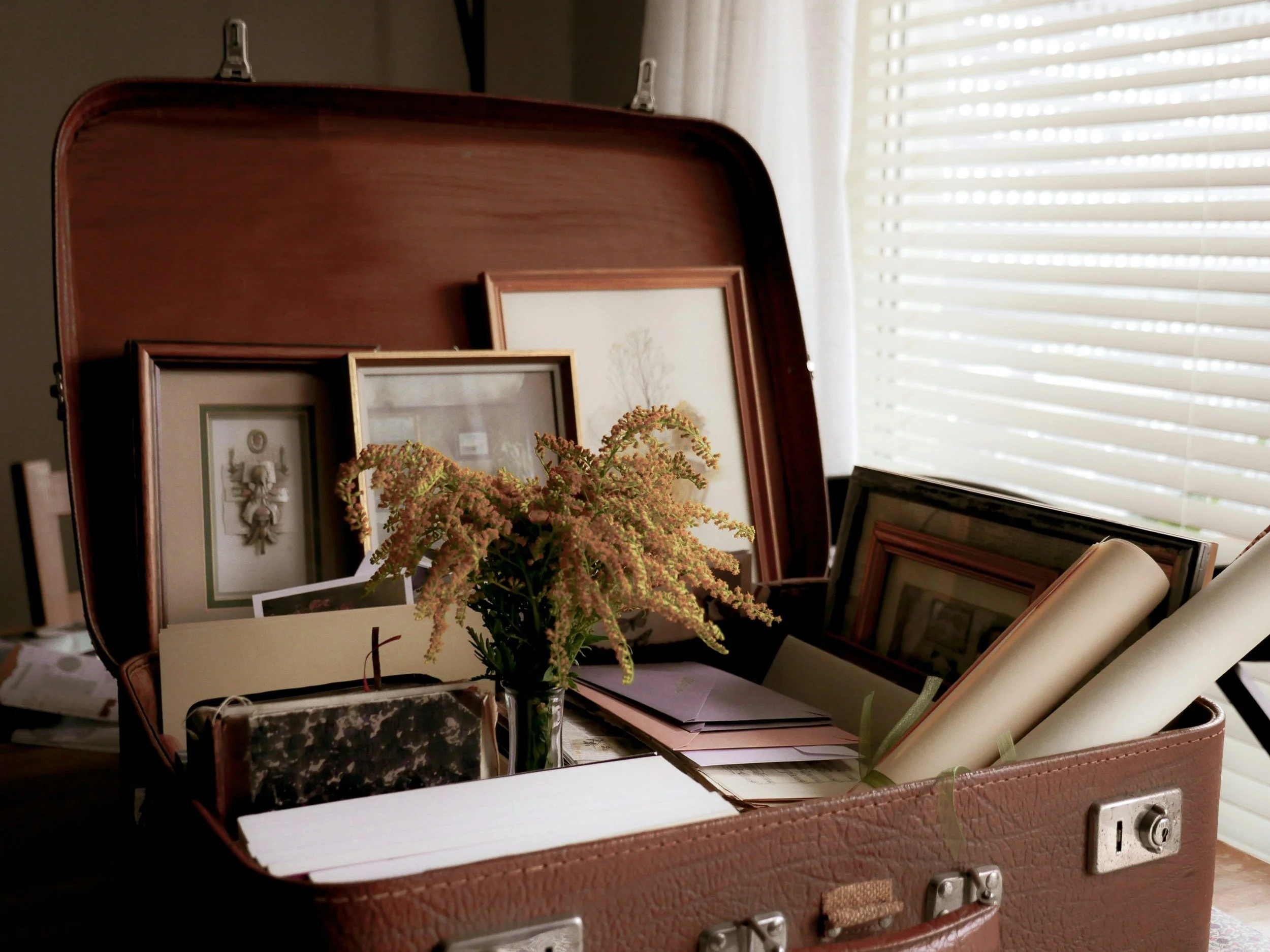
Moving home is many things. Exciting, stressful, logistically complex, emotionally charged. It is also it can be one of the greatest opportunities you will ever have to reset how you live.
At some point during every move, you will touch everything you own. Drawers come apart, cupboards empty, the contents of rooms that have been quietly accumulating for years suddenly have to be held, considered, and placed into boxes. It is relentless. But it is also remarkable. Because it is the one moment where inertia is broken — where the things you have stopped seeing, the things that have simply been there, are suddenly right in front of you again.
The question most people ask at that moment is: how do I get all of this to the new house? The better question is: do I actually want all of this in the new house?
The Cost of Moving What You No Longer Need
Every item that goes onto a removal van has a cost, not just financially, but in time, energy, and the mental overhead of living with it afterwards. Boxes that survive multiple moves unopened. A loft that fills before you have finished unpacking. A new home that never quite settles because there is simply too much competing for space.
Decluttering before a move is not an extra task on an already overwhelming list. It is one of the most efficient things you can do. Less to pack means packing is faster. Less arriving at the other end means unpacking is calmer. And everything that does come with you is there because you chose it, not because inertia carried it along.
The difference in how a home feels when you have arrived thoughtfully, rather than simply transferred everything from one address to another, is remarkable. Most people who experience it say the same thing: they wish they had done it sooner.
But Decluttering Is Only Half the Picture
Getting rid of what you no longer need is enormously satisfying. But without a framework for what comes next — for how you organise what remains, how you maintain it, and how you prevent the slow creep of accumulation from taking hold again — it is a temporary fix rather than a lasting change.
This is where so many well-intentioned home edits fall short. The clear-out happens. The charity bags leave. And within a year, sometimes less, the home has drifted back to where it started. Not because the people living in it are careless or disorganised, but because no system was put in place to sustain the result.
A home that works — one that stays calm, that functions intuitively, that does not require constant effort to maintain — is not just the result of decluttering. It is the result of organisation that is built into the structure of the space itself. Designated places for things. Logical systems. Habits that take seconds rather than effort. Limits that prevent future accumulation before it becomes a problem.
Introducing the STREAMLINE Method
There is a framework we return to again and again when helping clients think through not just how to declutter, but how to set up a home that stays organised for the long term. It is called STREAMLINE — a ten-step method developed by simplicity expert Francine Jay — and it is one of the most practical, accessible approaches to home organisation we have come across.
Each letter stands for a step in the process:
S is for Start Over — approaching each space with fresh eyes, as if you were moving in for the first time.
T is for Trash, Treasure or Transfer — sorting everything into one of three clear categories, so decisions are straightforward rather than agonising.
R is for Reason for Each Item — asking why each thing you own is there, and whether it genuinely earns its place.
E is for Everything in Its Place — giving every item a single, logical home it always returns to.
A is for All Surfaces Clear — understanding why clear horizontal surfaces are the single fastest way to change how a home feels.
M is for Modules — organising your home into contained, self-sufficient systems that are easy to maintain.
L is for Limits — setting boundaries on how much of any given thing you own, so the same decisions never have to be made twice.
I is for If One Comes In, One Goes Out — the daily habit that keeps a well-organised home in balance.
N is for Narrow Down — choosing quality and function over volume, and building a home that reflects the life you are actually living.
E is for Everyday Maintenance — the small, consistent habits that make everything else last.
Over the coming weeks, we will be publishing a dedicated post for each step of the method — exploring what it means in practice, how to apply it in a real home, and why it works. Whether you are in the middle of a move, thinking about one, or simply ready for a home that functions better than it does right now, the series is a practical place to start.
Where the Move and the Method Meet
A house move is the ideal moment to begin this process. You are already touching everything. You are already making decisions about what comes with you and what does not. The systems you build as you unpack — rather than months later, when habits have already formed around whatever emerged from the boxes — are the ones that stick.
Starting with the right framework, in the right order, with intention rather than urgency, is the difference between a home that settles quickly and one that takes months to feel like yours.
We have seen it many times. The clients who arrive in their new home to thoughtfully organised spaces — where everything has a place, surfaces are clear, and the structure of each room supports the way they actually live — settle in faster, feel less stressed, and describe a fundamentally different experience of moving house.
The STREAMLINE series begins with S: Start Over. Read the first post here →